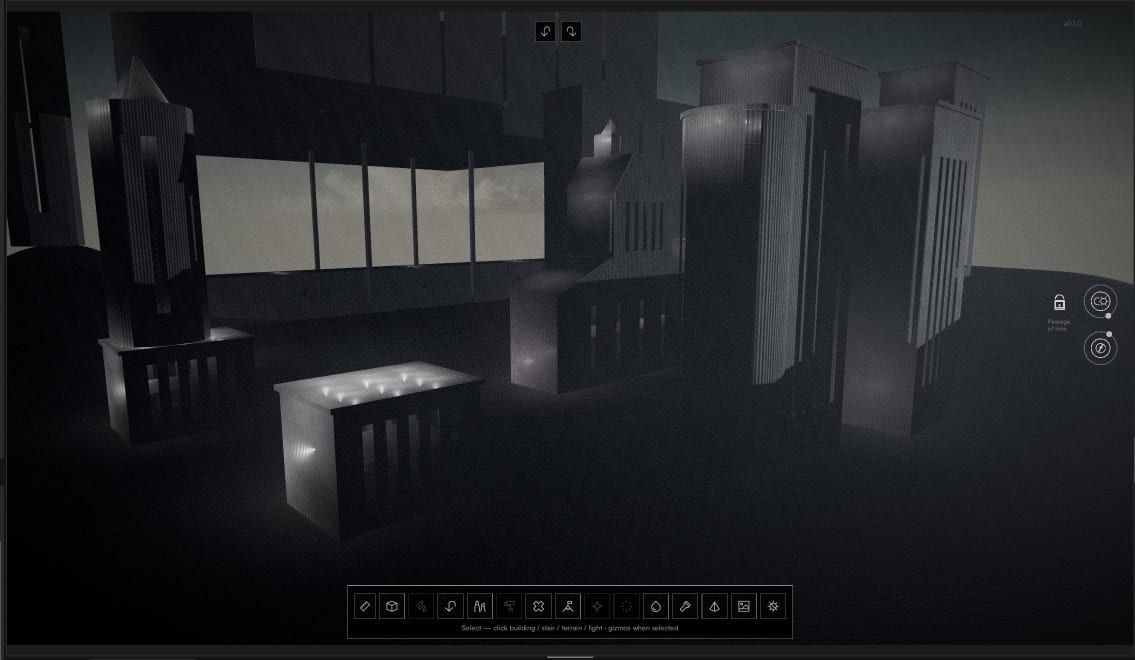
Same name. Same idea. No cross-pollination: I’ve never heard of the people making it, they’ve never heard of me. Nobody stole anything. It’s just what happens when you follow a reasonable process and a bunch of other people follow the same one.
This is the written companion to the video. Watch it below, or flip through the slides on their own.
Keyboard arrows or click to move through, F for fullscreen.
What happened
My first commit was on August 17th. I worked on it for about ten days, did a game jam, then moved on to something else entirely. Tiny Brutalism just sat there. Placeholders put theirs up on itch at the end of September.
There’s no heartbreak here, I wasn’t a year in. More of a hm, that stinks a little. The pitch was the same, too: it’s Tiny Glade, but brutalism. My own note at the start said “a darker, colder, geometric, monumental version of Tiny Glade.” Their line is “a cozy little sandbox for making not-so-cozy architecture.”
Tiny Brutalism by Placeholders →
How the idea shows up
It started with a different game, Cozy Clouds. I researched the cozy, wholesome space for a couple of days, but couldn’t make clouds work, and left it. I still wanted to make something wholesome, Tiny Glade was the big inspiration anyway, and from there it was a short step to brutalism, which I’ve always liked.
The other half is the market check, which I think most people do now: look at what Steam has, look for a gap.
- Tiny Glade, made by two people, sold around 616,000 copies in under a month, with about 1.3 million wishlists at launch.
- There’s clearly an audience for brutalism. The Brutalist won three Oscars, and r/EvilBuildings has around 1.5 million members.
- The art style is already defined. Raw concrete, big shapes, fog, hard light. I wasn’t inventing a look, I was pointing at one everybody recognizes.
- People were already trying to build brutalism inside Tiny Glade and hitting its limits. That’s the gap.
- Brutalism is cheaper to execute than gothic fairy-tale. Big shapes, rough surfaces, good lighting.
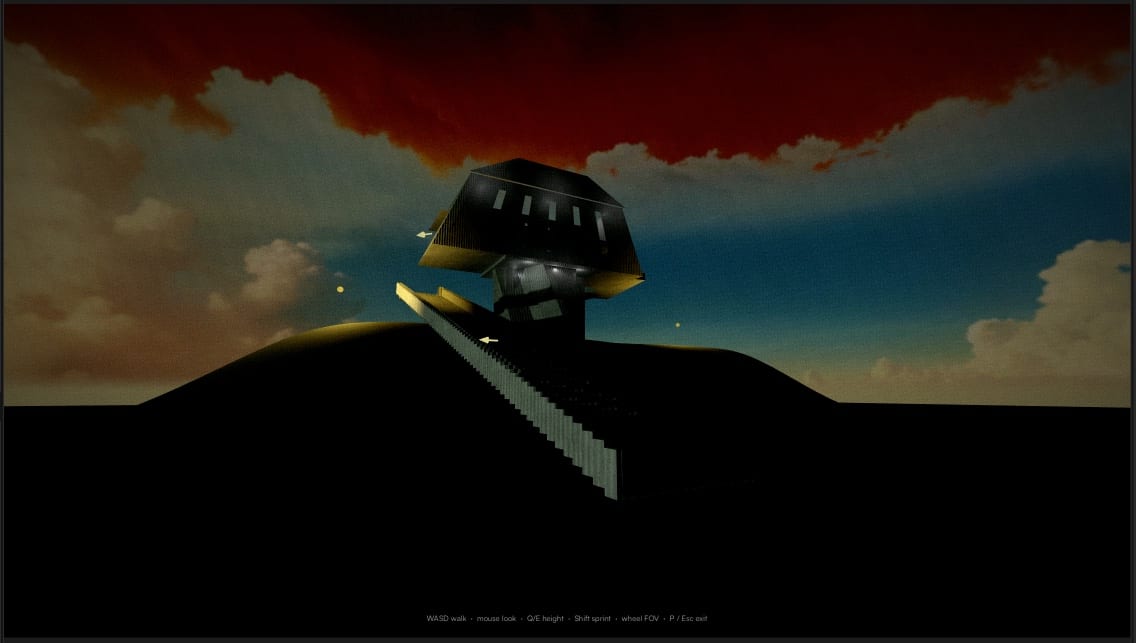
Add speed. By the 21st I had drawable terrain, building gizmos, stairs, lights and a windows tool, a vertical slice in about five days, because AI makes the shell of a game fast. The distance between “I had the idea” and “I have something playable” is small for everyone, all at the same time.
Same market data, same reference game, same gap, same tools, same process. It would almost be weirder if the output didn’t look the same.
This has always happened
Newton and Leibniz both came up with calculus. Darwin and Wallace both landed on natural selection. Oxygen was found by Scheele, Priestley and Lavoisier in the 1770s. The sociologist Robert Merton called these “multiples” and argued they’re the normal case, and that a unique discovery is the odd one.
Games and movies are full of them. Probability 0 and Downwell. Scoundrel and Donsol. Dante’s Peak and Volcano. The Prestige and The Illusionist. Even Minecraft: Notch found Infiniminer partway through and called it “the game I wanted to do.”
There’s a difference between a coincidence and a clone, though. Coincidence is two people ending up in the same place without knowing each other. A clone is someone seeing the thing, copying it in days, and trying to cash in. The Needle in a Haystack flood of lookalikes is that second thing, and people are right to be annoyed by it. The first one is just how ideas work.
What Placeholders did better
Placeholders did a better job than I would have, and I’d have needed more than a month to get there.
I was chasing stairs, trying to replicate Tiny Glade almost exactly, which was the wrong thing to chase. They went with an 8 by 8 plot, a photo mode and really good lighting. That’s a much better way to do it. I put effort into things that didn’t matter yet. I started too big.
They also shipped, read the comments, and pushed resizable plots within about a day. That’s the feedback loop I didn’t have.
The sharing problem
I should have shared more, but it’s hard to put a project out publicly right now. Someone posts that they spent 200 dollars on an AI version that looks better, and it probably does, because it’s a tech demo, and they take your momentum. Then again, Tiny Glade’s devs shared for a long time and had 257,000 wishlists three months after the reveal, and the Needle dev shared and got cloned. Both are true. It’s a trade-off, not a rule.
For now I’m doing in-person shows, where I can watch people play right in front of me. And I finally got approved on Steam, on the third try.
What I’m taking from it
Derek Sivers has a post where a brilliant idea with no execution is worth about 20 dollars, and the same idea with great execution about 20 million. The idea was never the hard part. Two of us had it at the same time.
- I’m pretty good at picking projects. The process picked the same one as someone who shipped it and did well.
- I’m worse at execution, especially iteration. I improve a lot with another person to bounce things off.
- Start smaller. A plot, a camera and good lighting would have been enough.
- Get it in front of people sooner, even if it’s just at a show.
And honestly, I’m fine with all of this. There are millions of people doing this every day and I’m lucky to be one of them. No one is going to remember your little game, and that’s okay. Just make the best one you can.
Go play Tiny Brutalism by Placeholders. All the sources are on the last slide of the deck.